𝐂𝐔𝐋𝐓𝐈𝐕𝐀𝐑 | 𝐓𝐀𝐔–𝐏𝐀𝐆𝐀𝐒𝐀 𝐀𝐠𝐫𝐨𝐦𝐞𝐭𝐞𝐨𝐫𝐨𝐥𝐨𝐠𝐢𝐜𝐚𝐥 𝐚𝐧𝐝 𝐔𝐩𝐩𝐞𝐫 𝐀𝐢𝐫 𝐒𝐭𝐚𝐭𝐢𝐨𝐧: 𝐀 𝐋𝐢𝐯𝐢𝐧𝐠 𝐋𝐚𝐛𝐨𝐫𝐚𝐭𝐨𝐫𝐲 𝐟𝐨𝐫 𝐖𝐞𝐚𝐭𝐡𝐞𝐫, 𝐂𝐥𝐢𝐦𝐚𝐭𝐞, 𝐚𝐧𝐝 𝐀𝐠𝐫𝐢𝐜𝐮𝐥𝐭𝐮𝐫𝐞 (𝙁𝙞𝙧𝙨𝙩 𝙤𝙛 𝙏𝙝𝙧𝙚𝙚 𝙋𝙖𝙧𝙩𝙨)
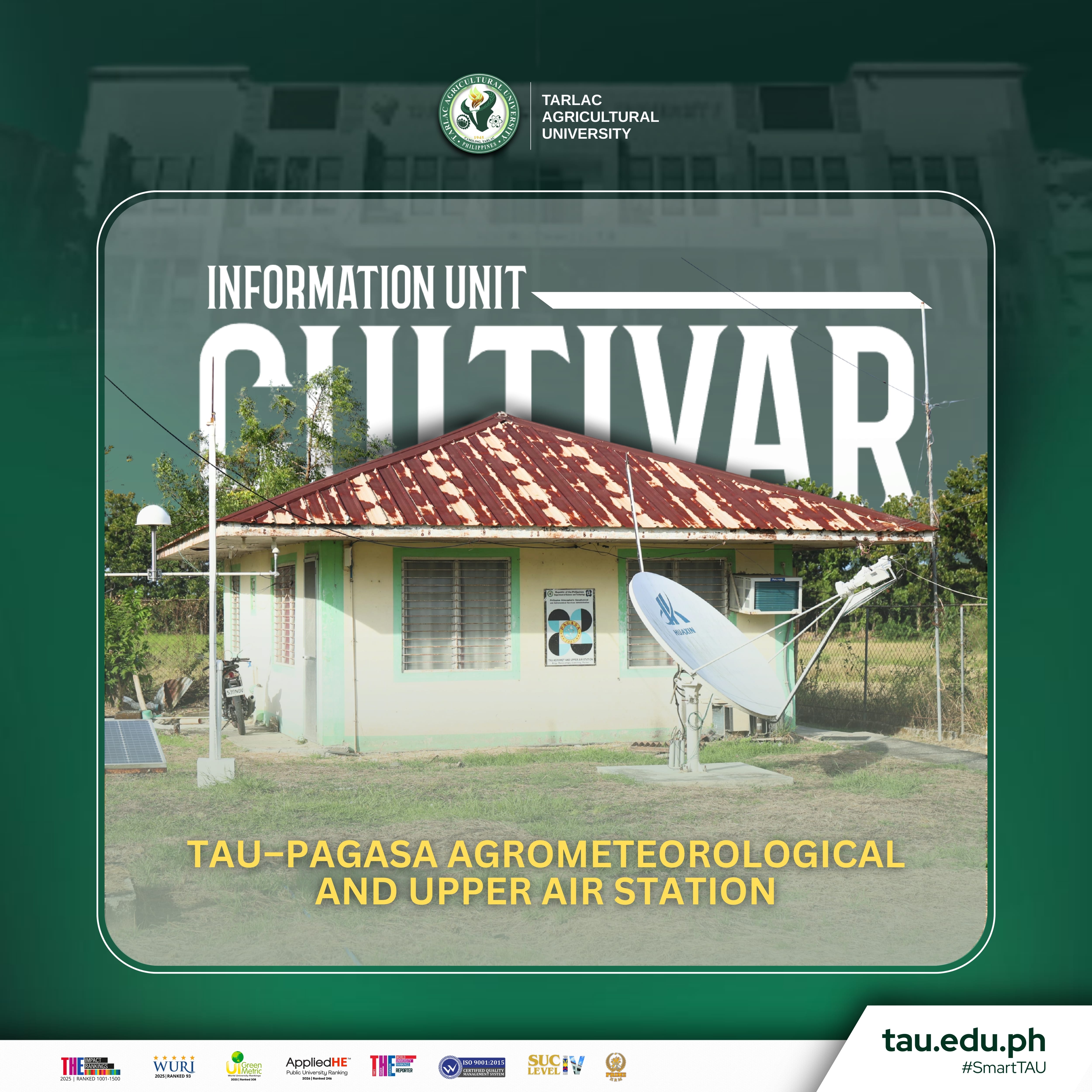
Tucked away in the middle of Tarlac Agricultural University’s (TAU) ricefields, a weathered, small, and unassuming building often catches the eye of passing employees and students.
To many TAUians, the structure might be mistaken for a simple rice granary, seamlessly nestled within the agricultural landscape of the campus. Few realize that within its walls, and through the instruments dotting the surrounding grounds, lies a critical nexus of science. This is no storage room; it is the 𝐓𝐀𝐔–𝐏𝐀𝐆𝐀𝐒𝐀 (Philippine Atmospheric, Geophysical and Astronomical Services Administration) 𝐀𝐠𝐫𝐨𝐦𝐞𝐭𝐞𝐨𝐫𝐨𝐥𝐨𝐠𝐢𝐜𝐚𝐥 𝐚𝐧𝐝 𝐔𝐩𝐩𝐞𝐫 𝐀𝐢𝐫 𝐒𝐭𝐚𝐭𝐢𝐨𝐧, a silent sentinel that has been unceasingly listening to the sky’s whispers for over three decades to safeguard the very foundation of our food security.
Operational since 1991, the station stands as a physical legacy of scholarly foresight, born of the dissertation of Dr. Guillermo S. Rillon, former Dean of the College of Engineering and Technology (CET). Its presence on campus serves as a living laboratory where data is transformed into decisions.
𝐑𝐞𝐚𝐝𝐢𝐧𝐠 𝐒𝐤𝐲'𝐬 𝐃𝐚𝐢𝐥𝐲 𝐏𝐮𝐥𝐬𝐞
Every day, while employees hurry to their offices and students rush to classes, the station’s four-person staff performs a meticulous ritual of monitoring. Meteorological Observers Eddie V. Ynocando and Larry Andrew D. Urriza, Technical Staff Jonas Joshua F. Tomas, and Engr. Fatima P. Gumamac translate atmospheric changes into a language farmers can use.
The station’s work is governed by the clock. Twice daily, without fail, at 8:00 AM and 2:00 PM, readings begin precisely ten minutes before the scheduled observation hour, a strict adherence that ensures data consistency.
The parameters collected from the basic vocabulary of weather: rainfall, temperature, humidity, atmospheric pressure, and wind direction and speed. From an evaporation pan measuring water loss, to a rain gauge capturing precipitation, and an aerovane charting the wind, each instrument tells part of the story.
Its most dramatic task is the launching of the upper-air weather balloon. Ascending to altitudes of 8,000 meters or more, it records vital data across multiple layers of the atmosphere. This task becomes especially challenging during the typhoon season or at night, when teams brave the elements to ensure this critical vertical profile reaches forecasting centers.
The station’s archive is a historical treasure. It bears evidence of a changing climate, with records showing a steady warming trend since 2008. Each month, this compiled data is submitted to the Department of Science and Technology (DOST), not merely as a report, but as a crucial input for national policy formulation and climate adaptation strategies.
To be continued…
#SmartTAU #GreenandGlobal #AgroMet #PAGASA #DOST #SDG2 #SDG4 #SDG13 #SDG17
Text | Jerome L. Duque [Information Unit]
Coordination | Fatima P. Gumamac [College of Engineering and Technology]
Photos | June Adel S. Guerrero [Information Unit]
Graphics | Omar U. Barauntong [Information Unit]