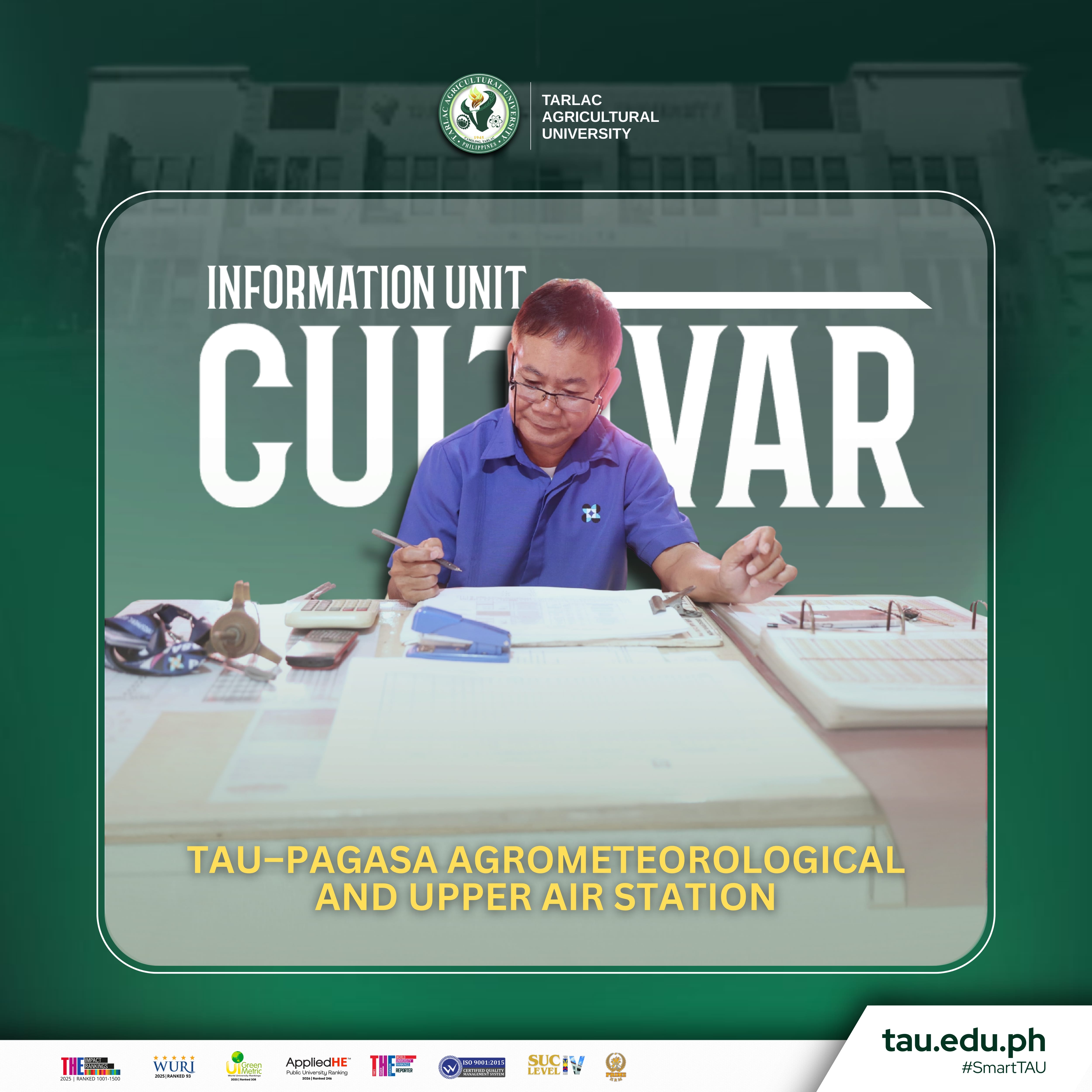
𝐂𝐔𝐋𝐓𝐈𝐕𝐀𝐑 | 𝐓𝐀𝐔–𝐏𝐀𝐆𝐀𝐒𝐀 𝐀𝐠𝐫𝐨𝐦𝐞𝐭𝐞𝐨𝐫𝐨𝐥𝐨𝐠𝐢𝐜𝐚𝐥 𝐚𝐧𝐝 𝐔𝐩𝐩𝐞𝐫 𝐀𝐢𝐫 𝐒𝐭𝐚𝐭𝐢𝐨𝐧: 𝐀 𝐋𝐢𝐯𝐢𝐧𝐠 𝐋𝐚𝐛𝐨𝐫𝐚𝐭𝐨𝐫𝐲 𝐟𝐨𝐫 𝐖𝐞𝐚𝐭𝐡𝐞𝐫, 𝐂𝐥𝐢𝐦𝐚𝐭𝐞, 𝐚𝐧𝐝 𝐀𝐠𝐫𝐢𝐜𝐮𝐥𝐭𝐮𝐫𝐞 (𝙎𝙚𝙘𝙤𝙣𝙙 𝙤𝙛 𝙏𝙝𝙧𝙚𝙚 𝙋𝙖𝙧𝙩𝙨)
You may read Part 1 here: https://bit.ly/4qSdJZx
𝐅𝐫𝐨𝐦 𝐃𝐚𝐭𝐚 𝐭𝐨 𝐇𝐚𝐫𝐯𝐞𝐬𝐭: 𝐓𝐡𝐞 𝐔𝐧𝐛𝐫𝐞𝐚𝐤𝐚𝐛𝐥𝐞 𝐋𝐢𝐧𝐤 𝐭𝐨 𝐀𝐠𝐫𝐢𝐜𝐮𝐥𝐭𝐮𝐫𝐞
The true purpose of the 𝐓𝐀𝐔–𝐏𝐀𝐆𝐀𝐒𝐀 𝐀𝐠𝐫𝐨𝐦𝐞𝐭𝐞𝐨𝐫𝐨𝐥𝐨𝐠𝐢𝐜𝐚𝐥 𝐚𝐧𝐝 𝐔𝐩𝐩𝐞𝐫 𝐀𝐢𝐫 𝐒𝐭𝐚𝐭𝐢𝐨𝐧 is felt far beyond the boundaries of its compound, extending across a 50-kilometer radius. Within this reach, the station’s data, its percentages, millimeters, and degrees, cover much of Tarlac and even portions of neighboring provinces, defining and refining decisions on the ground.
From these measurements come highly specialized farm weather forecasts that translate science into action. Farmers rely on them to determine the precise timing for planting sensitive seedlings, initiating irrigation cycles, applying fertilizers for maximum uptake, and harvesting crops at optimal maturity.
Beyond day-to-day decisions, the station also provides the rigorous scientific backbone for developing localized crop calendars and evidence-based six-month seasonal climate outlooks, giving the agricultural community the foresight needed for long-term effective risk mitigation.
A careful analysis of the station’s historical data archive reveals a sobering and undeniable trend of climatic instability. Over the years, it has recorded extreme thermal events, including a searing high of 42°C during the blistering April of 2024 and a surprisingly cool low of 16.5°C in February 2017. These are the historic highs and lows documented at TAU and are concrete pieces of a broader narrative of increasingly unpredictable weather patterns.
This growing volatility elevates the station’s role from a passive observatory to a critical frontline defense, supplying the intelligence agriculture needs to adapt. Operationally, it functions as a key node in a national food security network, where its continuous stream of validated meteorological data supports collaboration among the Department of Science and Technology (DOST), the Department of Agriculture (DA), and the National Food Authority (NFA), informing policy, guiding resource allocation, and strengthening early warning systems for droughts and floods that ultimately safeguard the country’s agricultural output.
For generations of students in Agricultural and Biosystems Engineering and Animal Science programs, visits to the station serve as an immersive introduction to related disciplines. They come not merely to observe, but to engage experienced station personnel, to gather raw data for theses, and to witness firsthand the careful calibration, maintenance, and data-processing work that turns atmospheric readings into a practical resource.
Ultimately, the station’s greatest contribution lies in its role as a vital translator between the complex language of climate science and the practical realities of agriculture. In doing so, it empowers farmers, reinforces agricultural stability, and supports the long-term prosperity of the community it was built to serve.
To be continued…
#SmartTAU #GreenandGlobal #AgroMet #PAGASA #DOST #SDG4 #SDG13 #SDG17
Text | Jerome L. Duque [Information Unit]
Photos | June Adel S. Guerrero [Information Unit]
Graphics | Omar U. Barauntong [Information Unit]